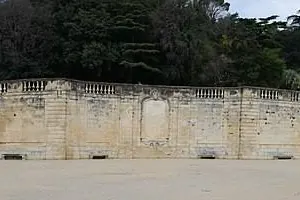

Here you are in the Jardins de la Fontaine, around the spring that gave birth to Nîmes. This karst spring drew inhabitants as early as the Iron Age, in the sixth century BC. In Roman times, a great sanctuary, the Augusteum, occupied the site; the Temple of Diana is a still visible remnant of it. The present gardens were laid out between 1745 and 1755, under the direction of the engineer Jacques Philippe Mareschal, following a plan by the architect Dardalhon chosen in 1740. The design respects that of the ancient sanctuary, with its two half-moon staircases leading down to the spring. It is one of the first public gardens in Europe. Stroll among the pools and balustrades, and look for the sculptures by Nicolas Sébastien Adam and the large Medici-style vases that came from the Château de la Mosson. The paths are planted with pines, horse chestnuts, plane trees, limes and cedars. The gardens have been a listed historic monument since 1840 and carry the Remarkable Garden label. Admission is free.
History
It all begins with a karst spring that attracted human settlement as early as the Iron Age, in the sixth century BC. In Roman times, the site hosted an important religious complex, the Augusteum, of which the Temple of Diana is the main visible remnant.
In 1740, the plan by the architect Dardalhon was chosen. The work was carried out from 1745 to 1755 under the direction of the engineer Jacques Philippe Mareschal. The gardens were listed as a historic monument in 1840, with additional protection in 1989 and 1991, and today carry the Remarkable Garden label.
Art and architecture
It is a French formal garden. Its layout follows that of the ancient sanctuary, notably with two half-moon staircases giving access to the spring. The decoration includes sculptures by Nicolas Sébastien Adam and Medici-style vases from the Château de la Mosson. The planting combines pines, horse chestnuts, plane trees, limes and cedars.
Anecdotes
The gardens are considered one of the first public parks in Europe. Their eighteenth-century layout was designed around the Roman remains discovered on site, which explains the close dialogue between classical pools and ancient ruins.
What to look for
Go down towards the spring by one of the half-moon staircases, then look at the pools and their balustrades. Look for the statues by Nicolas Sébastien Adam and the large vases. To one side, the Temple of Diana is well worth a detour, and by climbing the shady paths of Mont Cavalier you will reach the Tour Magne.
Practical
Admission is free. Opening hours vary with the season: please check them on the city’s website, nimes.fr. The gardens lie at the foot of Mont Cavalier, west of the centre; you can walk there from the Maison Carrée along the Quais de la Fontaine. The upper part is on a slope, so wear good shoes to climb up to the Tour Magne.
Nearby
Within the gardens, the Temple of Diana and, higher up, the Tour Magne are the two ancient stops on the site. Heading back down to the centre along the Quais de la Fontaine, you will find the Maison Carrée and the Carré d’Art.
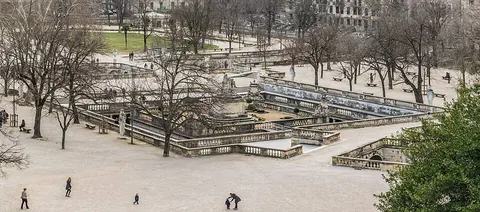

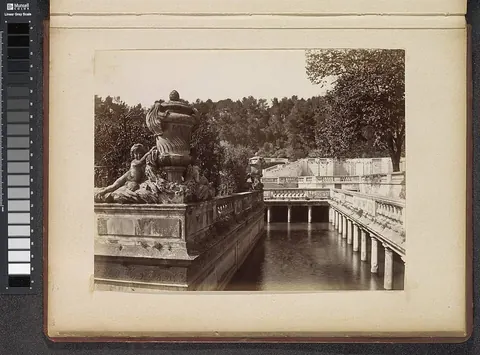

On site, look for: Find the two half-moon staircases that lead down to the spring.
Test yourself
When were the gardens laid out?
- Between 1745 and 1755 (answer)
- In 1900
- In the Middle Ages
What was the Roman sanctuary on the site called?
- The Augusteum (answer)
- The Capitol
- The Forum
Which engineer directed the work?
- Haussmann
- Mareschal (answer)
- Vauban
Sources
Information checked on 6 October 2026.