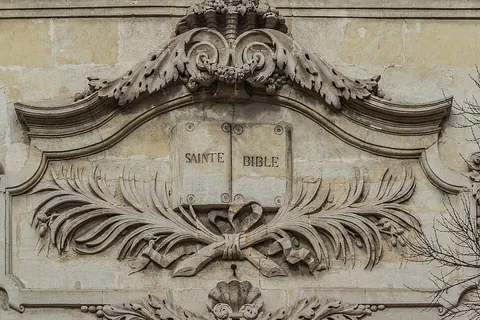
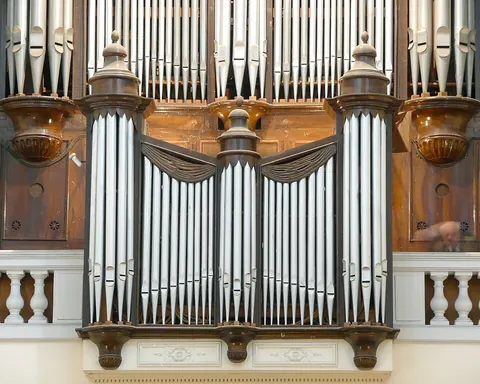
Here you are in front of the Grand Temple, between boulevard Amiral-Courbet and Place du Grand-Temple. Its baroque façade often comes as a surprise: you expect the plainness of a Protestant church, and you find something that looks like a Catholic one. That is no accident, because the building was first the chapel of a Dominican convent, built between 1714 and 1736. During the Revolution, the friars left. The Protestants of Nîmes then rented the building, and the pastor Paul Rabaut opened it for their worship. In 1803, the church was officially assigned to Reformed worship and took the name Grand Temple. Inside, the decoration remains plain and solemn, in the spirit of the Protestant churches of Languedoc. Two black marble plaques display the Ten Commandments and a summary of the law of Moses, and a great organ, built in 1821, dominates the hall. The building now belongs to the United Protestant Church of France and has been a listed historic monument since 1964. Take time to look at the façade: it tells the Catholic past of the place.
History
The building was constructed between 1714 and 1736 as the church of the Dominican convent of Nîmes. At the Revolution, the Dominicans abandoned it. The Protestants then rented the church, which the pastor Paul Rabaut opened for their worship.
In 1803, the building was officially assigned to Reformed worship and given the name Grand Temple. It now belongs to the United Protestant Church of France, and an association manages the property.
Art and architecture
The façade is baroque, a legacy of its first role as a convent church. The interior, on the other hand, illustrates the plain and solemn style typical of the Protestant churches of Languedoc, with no images or statues of saints.
The interior decoration is limited to two black marble plaques, bearing the Ten Commandments and a summary of the law of Moses, and a great organ built in 1821.
Anecdotes
The building therefore changed denomination in less than a century: raised for Catholic friars in the early eighteenth century, it became the city’s main Reformed church in the early nineteenth century. The pastor Paul Rabaut, who opened the building for the Protestants, is a leading figure of Protestantism in Nîmes.
What to look for
First look at the baroque façade, then compare it with the much barer interior, if the church is open. Look for the two black marble plaques and the great organ of 1821.
Practical
The church is at 23 boulevard Amiral-Courbet, on the edge of the Écusson, a few minutes’ walk from the Arena and the Porte d’Auguste. It is an active place of worship: please be discreet during services.
Nearby
Boulevard Amiral-Courbet leads to the Porte d’Auguste, one of the gates in the Roman wall. The historic centre, the Écusson, begins just behind the church.
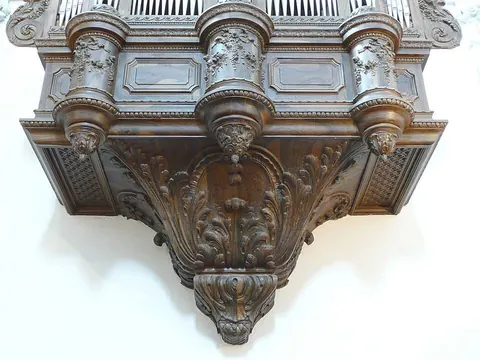


On site, look for: Spot on the façade the baroque features that betray the building’s Catholic origins.
Test yourself
Which religious order had the building constructed?
- The Benedictines
- The Dominicans (answer)
- The Jesuits
In which year was it assigned to Reformed worship?
- 1685
- 1803 (answer)
- 1905
What do the black marble plaques show?
- The Ten Commandments (answer)
- The list of pastors
- The map of the city
Sources
Information checked on 6 October 2026.